Southern Pygmy Perch Confirmed in Little Billabong Creek

In February 2024, we did some snapshot eDNA sampling at water quality sites across the Upper Billabong as part of Refreshing Rivers Project, and the results identified a potential new site for the Southern Pygmy Perch in the Little Billabong. We knew that there are fish in three other systems in the Mountain Creek and the Upper Wantagong systems, but it was very surprising to find their eDNA showing up in the top of the catchment.
Fast-forward 12 months, and we had the opportunity to work with NSW DPI and do some electrofishing at the Upper Billabong site to (hopefully) confirm the eDNA results. This work was again undertaken as part of our part of the Refreshing Rivers Project, Refreshing the Upper Billabong.
On the morning of the planned day of sampling (Friday 14th February), we had some of the heaviest rain we've seen in Holbrook so far this year, and we were worried that we might have to cancel, but the radar showed that the rain would pass relatively quickly, so we decided to go ahead.
I (Peter Rowland) met Luke Pearce and Simone Mabon from NSW DPI on site, and the rain returned for about 15 minutes while we assessed the waterbody. Once the rain eased, Luke and Simone got their gear ready, but the electrofisher was not starting up properly and, despite much fiddling and checking of connections, Luke said it was not able to be used. Luke had to then resort to using a hand dip net to see if he could catch one.
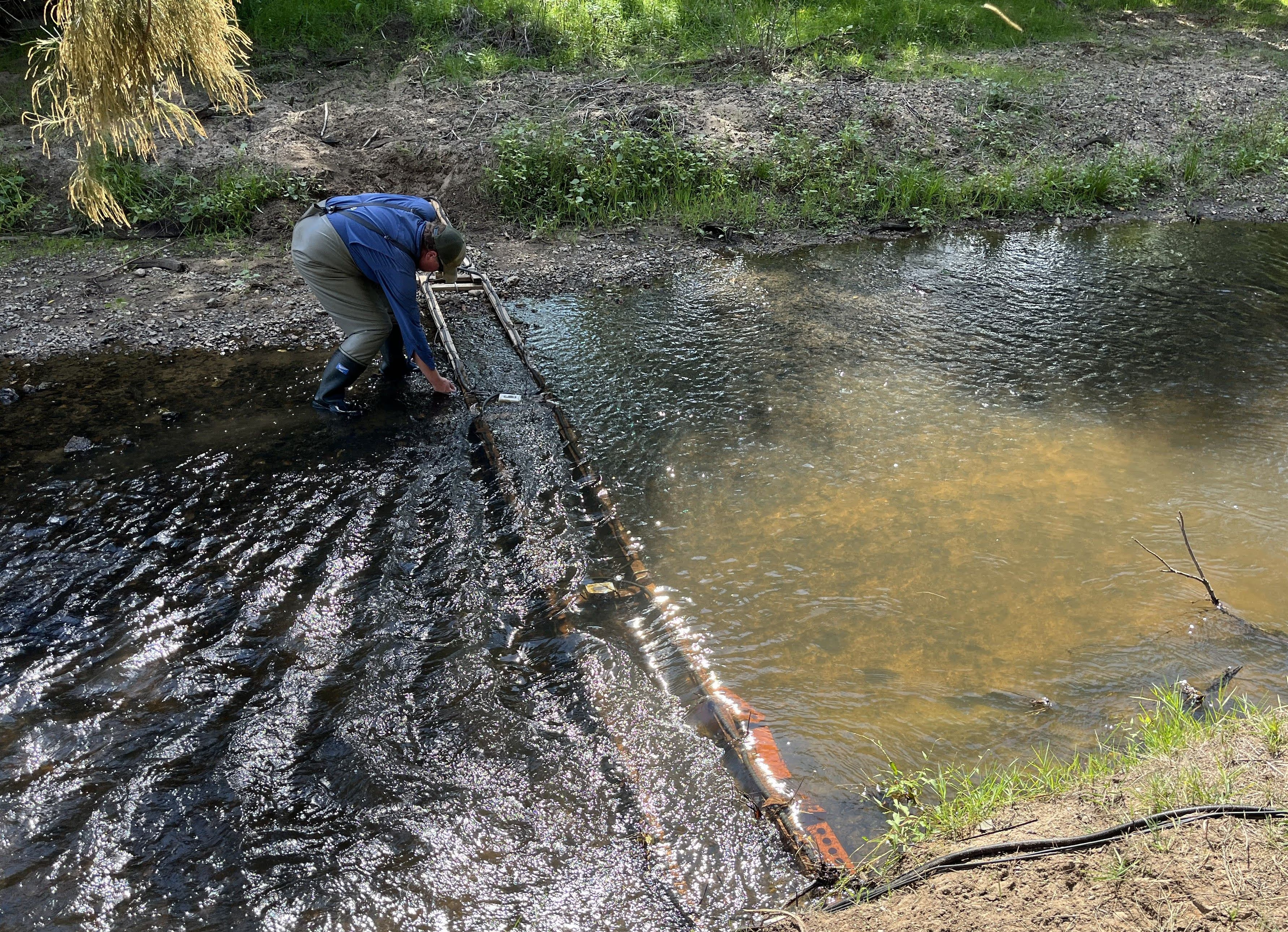
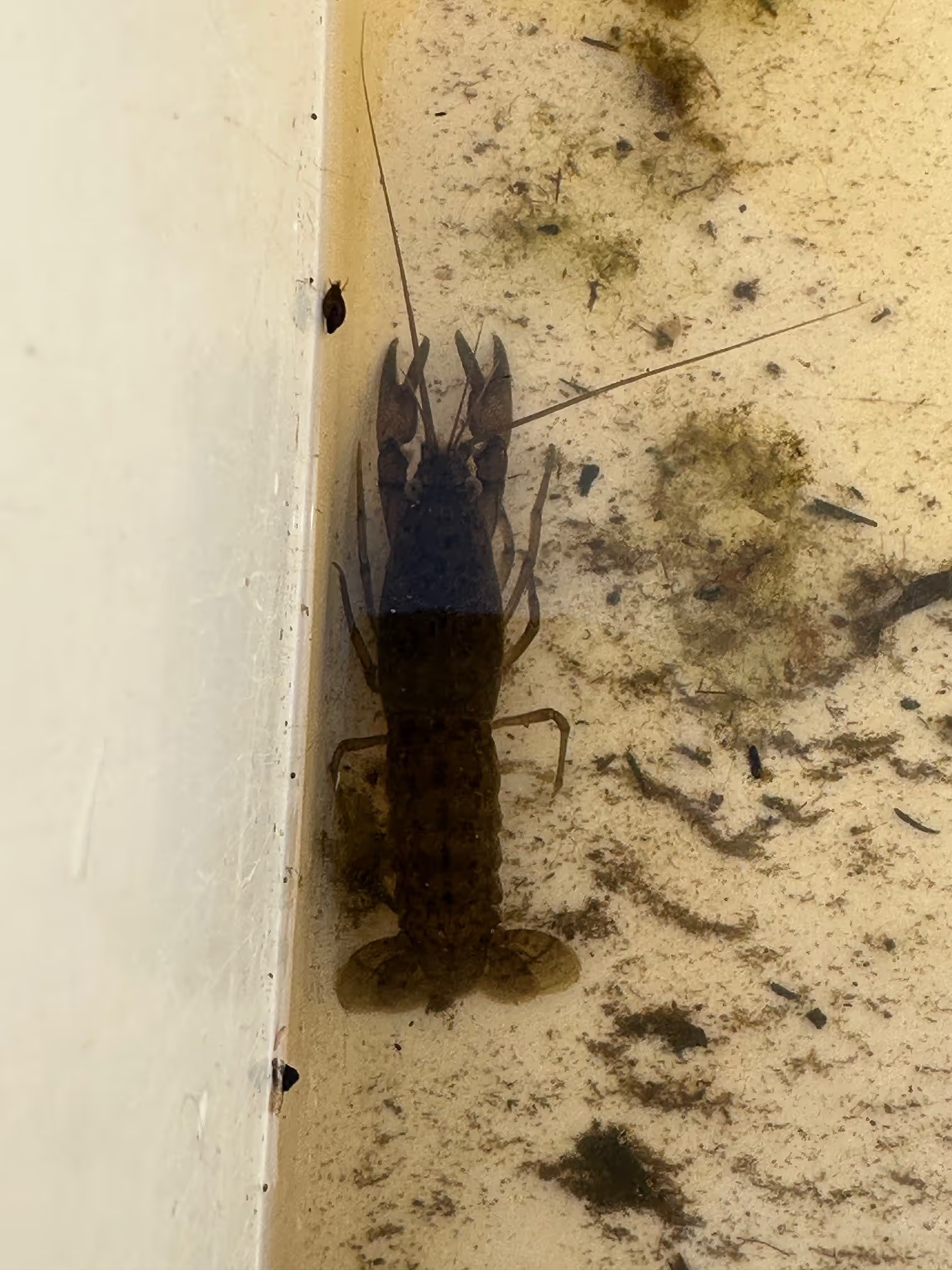
Luke popped his waders on and started dip-netting the main waterbody, working his way along the longest bank. He scooped his net under the floating vegetation, and within 10 or 12 scoops, at the end of a fallen log, Luke gave a cheer - he had found a Southern Pygmy Perch! We were all so delighted to have the eDNA results verified, and to confirm the presence of the species in the new location. The individual (pictured) is a male, and Luke assessed it as around 3 yrs old (Southern Pygmy Perch can live to around 5).
Although Luke continued to net for another 30-40 minutes, and walked along around 40-50 metres of the creek, he did not catch another Southern Pygmy Perch. It is likely that this population is a very small one.
Luke and Simone are keen to revisit the site once the electrofisher has been repaired, and will conduct a more extensive search, so watch this space...